Kitchen-Born Colors: Four Small Experiments to Learn Natural Dyeing at Home
For millennia people have turned kitchen scraps and garden leaves into color. From the madder and indigo vats of early textile centers to scraps of onion skin boiled for peasant garments, plant dyes are a thread connecting household life and craft. The exercises below are a gentle, hands-on way to learn how dyes behave, what different fibers accept, and how simple mordants and techniques shape results.
How to use these experiments
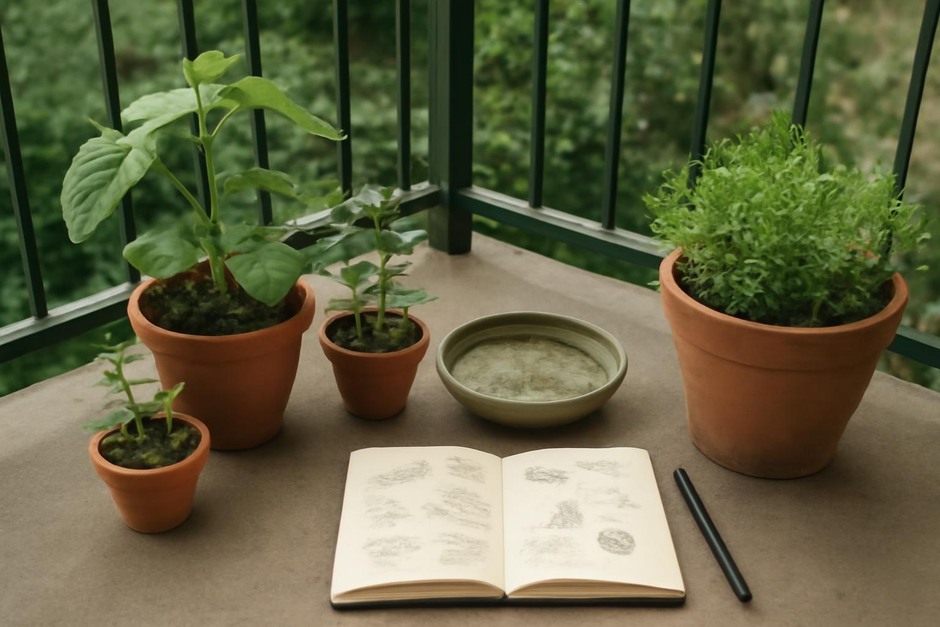
Work through the four small experiments in order. Each one is short and uses ordinary materials. Keep a notebook or take photos to record color, time, and any changes. The goal is not perfection but to build an intuitive sense of what each dye and method produces.
Experiment 1: Make a basic onion-skin dye (color sample)
- Collect onion skins (yellow or red) until you have a handful. Save old tea bags or fresh tea leaves as an alternative brown dye.
- Place skins in a small pot with enough water to cover. Simmer gently for 30–45 minutes to extract color. Strain the liquid into a bowl.
- Prepare a small fabric swatch (cotton or linen about 10 x 10 cm). Wet it, squeeze out excess water, then add to the warm dye and simmer for 20–30 minutes. Leave longer for deeper color.
- Rinse the swatch in cool water and let it dry. Note shade, uniformity, and whether the color changed after rinsing.
Observation focus: How intense is the color? Does it wash out partially? This simple test shows how much pigment is extractable from common kitchen waste.
Experiment 2: Try two simple mordants—salt and vinegar
- Cut two small swatches of the same fabric type. For cotton/linen, dissolve one tablespoon of salt in 500 ml warm water and soak the first swatch for 30 minutes. For wool/silk, soak the second swatch in a mix of one part white vinegar to four parts water for 30 minutes.
- Rinse lightly (do not scrub) and then put each swatch into the onion-skin dye from Experiment 1. Simmer both for 20–30 minutes.
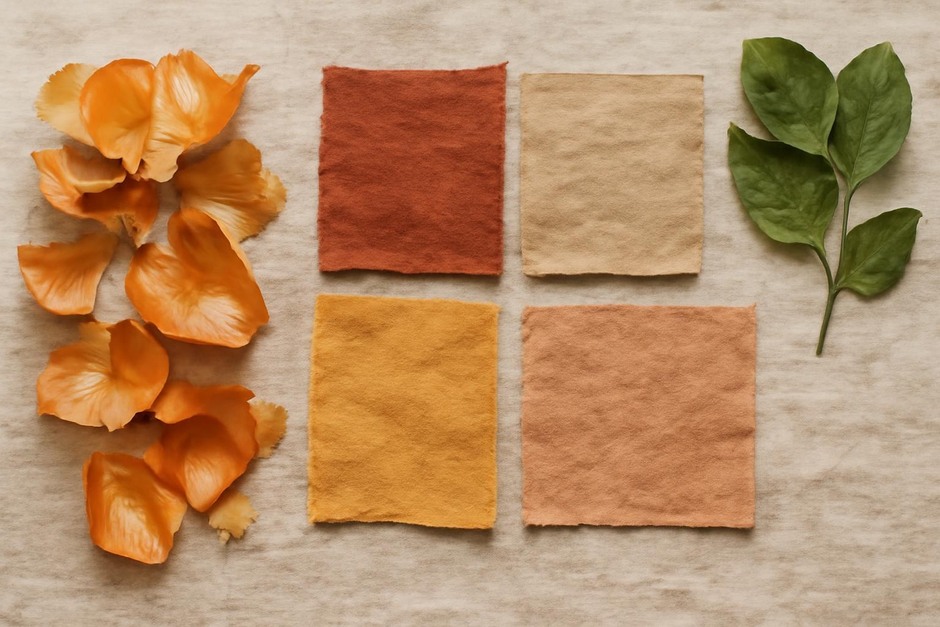
- Rinse and dry both swatches side by side. Compare the depth and tone of the colors.
Observation focus: Mordants change how a fiber accepts dye. These household options show basic differences between plant fibers and animal fibers.
Experiment 3: Eco-printing with leaves and flowers
- Choose a fresh leaf or a few flat flowers (ferns, eucalyptus leaves, rose petals). Wet a pre-mordanted cotton or silk swatch (use the vinegar bath for silk/wool).
- Lay the plant material on the fabric, fold or roll tightly, and secure with string. Steam the bundle over simmering water for 45–60 minutes (a steamer basket or a simple colander above a pot works well).
- Let the bundle cool before unwrapping. Rinse gently and dry to reveal the transferred shapes and colors.
Observation focus: Eco-printing captures shapes as well as pigments. Notice where tannins in some leaves produce stronger marks and how close contact affects the print.
Experiment 4: Layering and mixing dyes
- Prepare two small dye baths: one from beetroot (for pinks) and one from turmeric or onion skins (for yellows/ochres). Keep each dye warm but not boiling.
- Take a mordanted swatch and dip it first in one dye for 10–15 minutes, rinse lightly, then move it into the second dye. Alternatively, try half-submerging to create a gradient.
- Rinse and dry. Record how colors combine and whether one overwhelms the other.
Observation focus: Some dyes are dominant and will mask earlier colors; others blend subtly. Overdyeing is the simplest way to expand a palette without new pigments.
Final notes and next steps
Keep samples together with notes on fiber, mordant, dye material, time, and temperature. Over time you’ll see patterns: which plants give strong color, which fibers hold better, and how simple changes affect outcome. With these small experiments you can graduate to larger projects—dying tea towels, napkins, or creating a small eco-printed scarf—while relying on the same basic observations you’ve made here.
Natural dyeing is part history and part experiment. By treating each test as a small science project, you build a practical skill rooted in human domestic traditions—one kitchen scrap at a time.